Looking at an Apple
camera above the apple
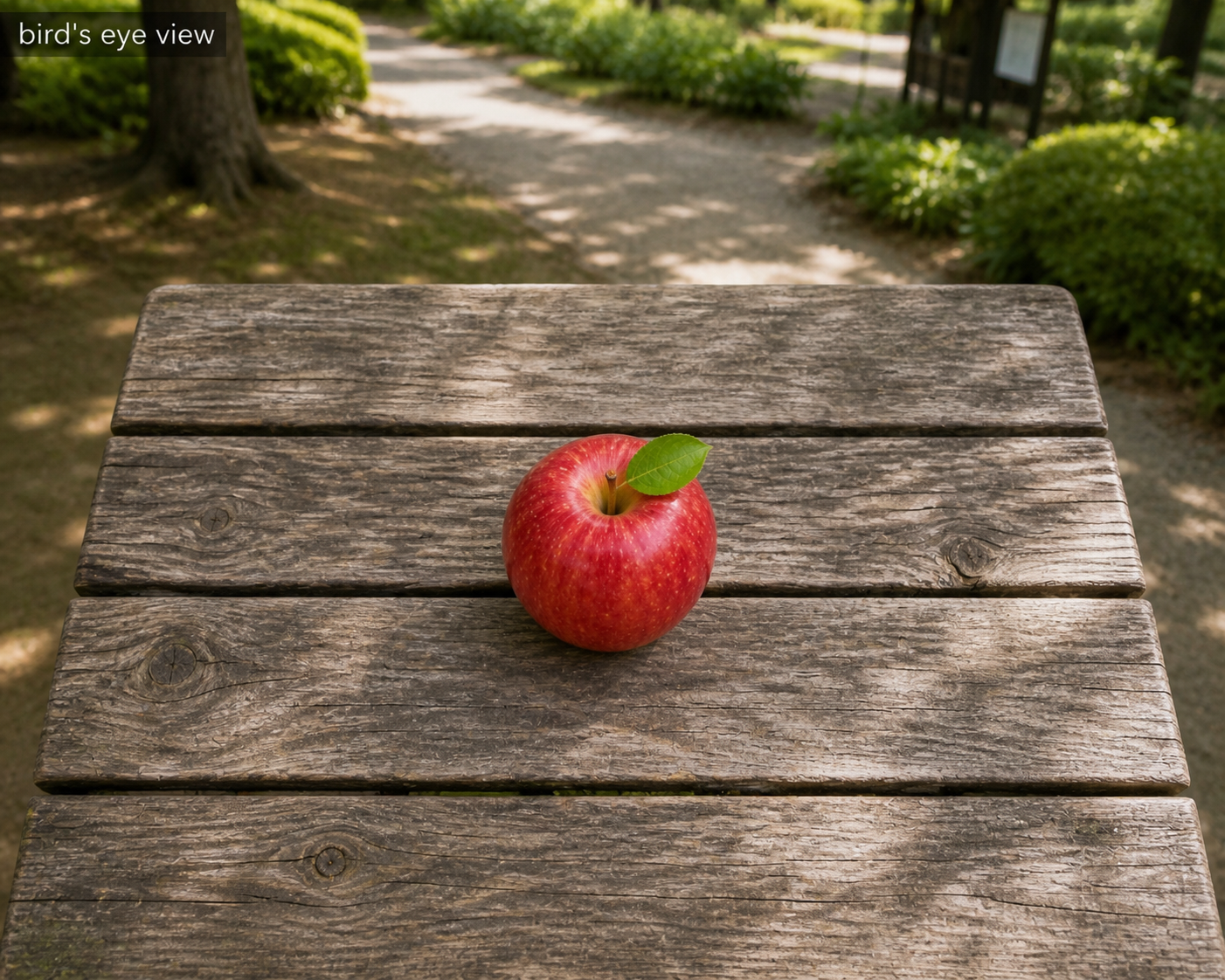
Prompt
"a red apple, bird's eye view, realistic photography, wooden table in a park"
On the angle variable in image prompts
The first article in a series on prompt literacy through controlled variation.
A red apple, photographed straight on, is just a fruit.
The same apple from above looks like a target. From below, it looks like a planet. Photographed in macro, it looks like a landscape of waxy red mountains. Photographed in isometric, it looks like a 3D illustration in a children's book.
Nothing about the apple changed. Only the angle did.
This is the first thing I want you to notice, because it tends to disappear when we talk about prompts. We argue endlessly about styles, about lighting, about which artist's name to invoke. But we rarely talk about angle. And angle, I would argue, is doing more work than any of us give it credit for.
What "angle" actually means
In photography, angle refers to where the camera is, relative to the subject. In prompts, angle is a small handful of words that change everything about how an AI model imagines the scene.
Consider these:
- bird's eye view
- top down
- flat lay
- high angle
- eye level
- low angle
- worm's eye view
- macro close-up
- side profile
- three-quarter view
- isometric
- Dutch angle
- fisheye
- cross section
Each of these will produce a recognizably different image, even when every other word in the prompt is identical. The model has been trained on millions of photographs and illustrations tagged with these terms. It knows what a "low angle" looks like, statistically, across a huge corpus of images. When you include the words, you are not just describing position. You are pulling on a thick rope of associations that come with that position.
Low angle, for example, doesn't just mean "camera is below the subject." It means dramatic, heroic, sometimes ominous. It is the angle of authority, the angle politicians prefer for their portraits, the angle in superhero films when the protagonist is introduced. The model knows this. When you write "low angle" into your prompt, you are not asking for a camera position. You are asking for a feeling.
Five angles, five apples
To make this concrete, let's look at five common angles applied to a single subject. Same red apple. Same artistic medium (realistic photography, white background). Only the angle changes.
1. Bird's eye view
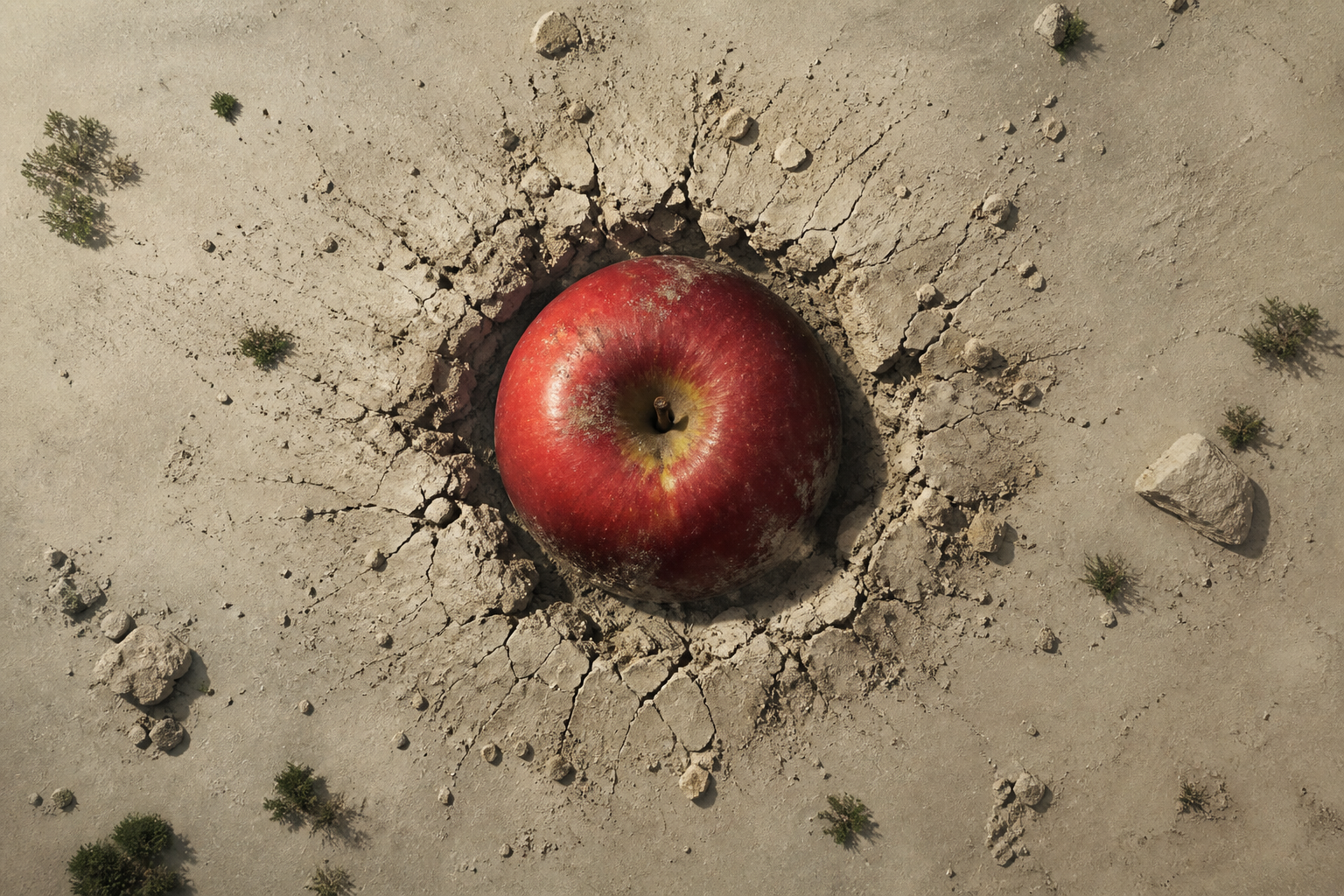
The apple becomes a flat shape. Depth disappears. Pattern emerges. This angle is favored in editorial food photography, scientific diagrams, top-down product shots.
What the prompt is doing: collapsing the third dimension. The model interprets bird's eye as "no perspective lines, subject as graphic element, often arranged with other objects."
When to use it: when you want the image to read as design rather than scene.
2. Eye level
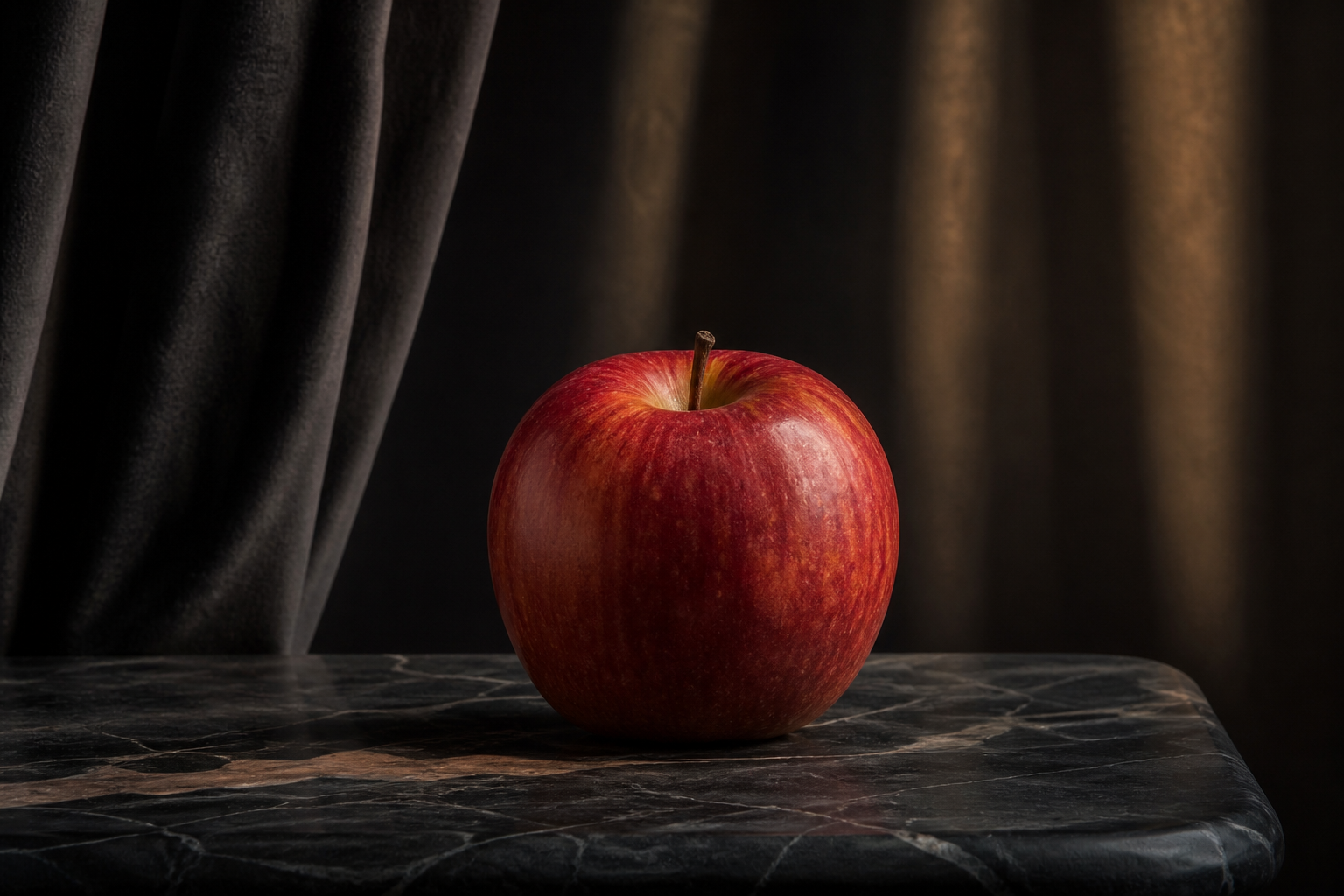
This is the default angle if you write nothing. The apple sits at the same height as the viewer's eye. It is neutral, calm, neither dramatic nor decorative.
What the prompt is doing: not much. Eye level is what the model defaults to when no angle is specified.
When to use it: when you want focus on the subject itself, without angle as a narrative.
3. Worm's eye view
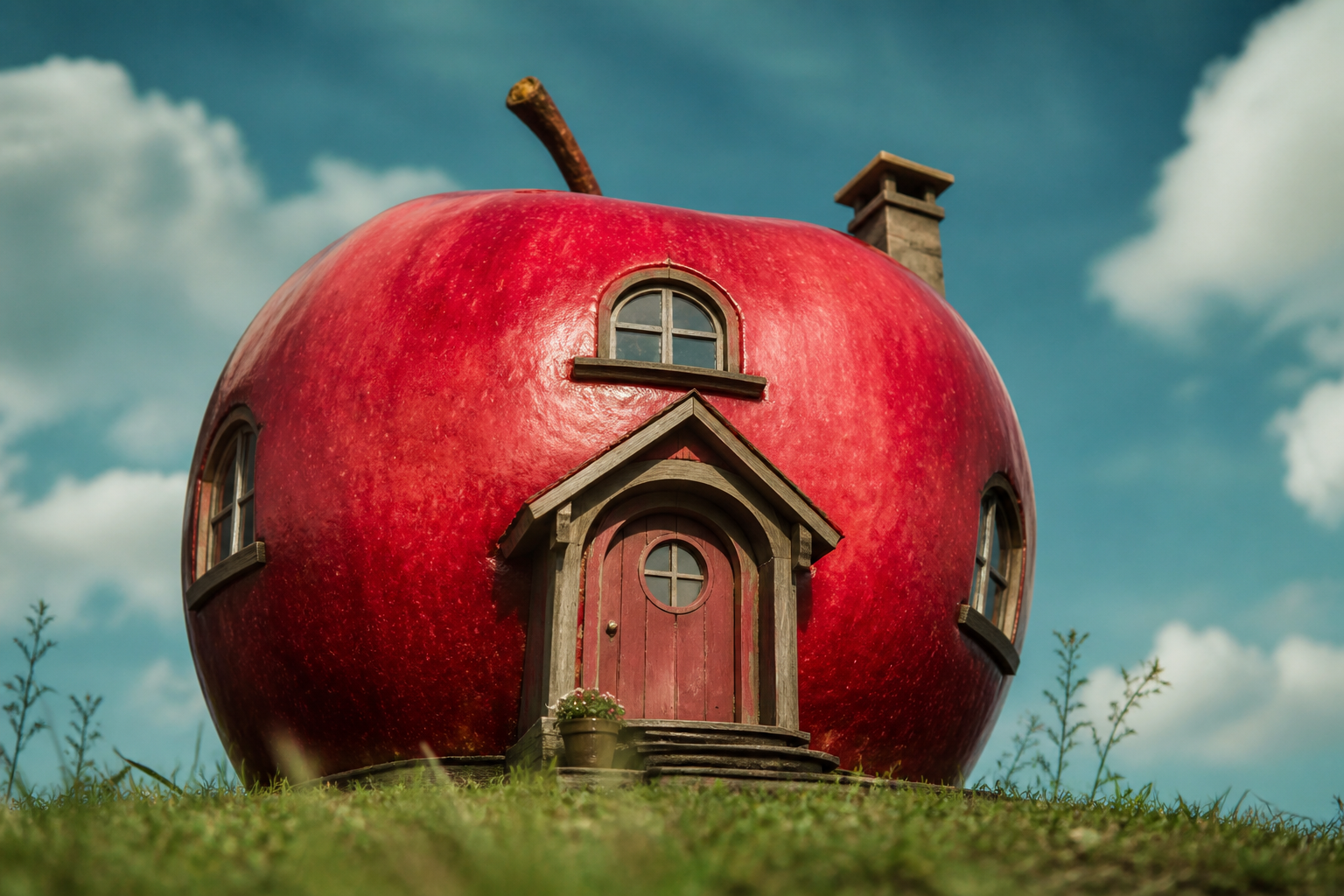
The apple looms. Its stem reaches into the sky. Suddenly, this small fruit feels monumental.
What the prompt is doing: invoking the visual language of monumentality. Architectural photography uses worm's eye view to make buildings feel grand. The model has absorbed this association.
When to use it: when you want a small subject to feel important.
4. Macro close-up
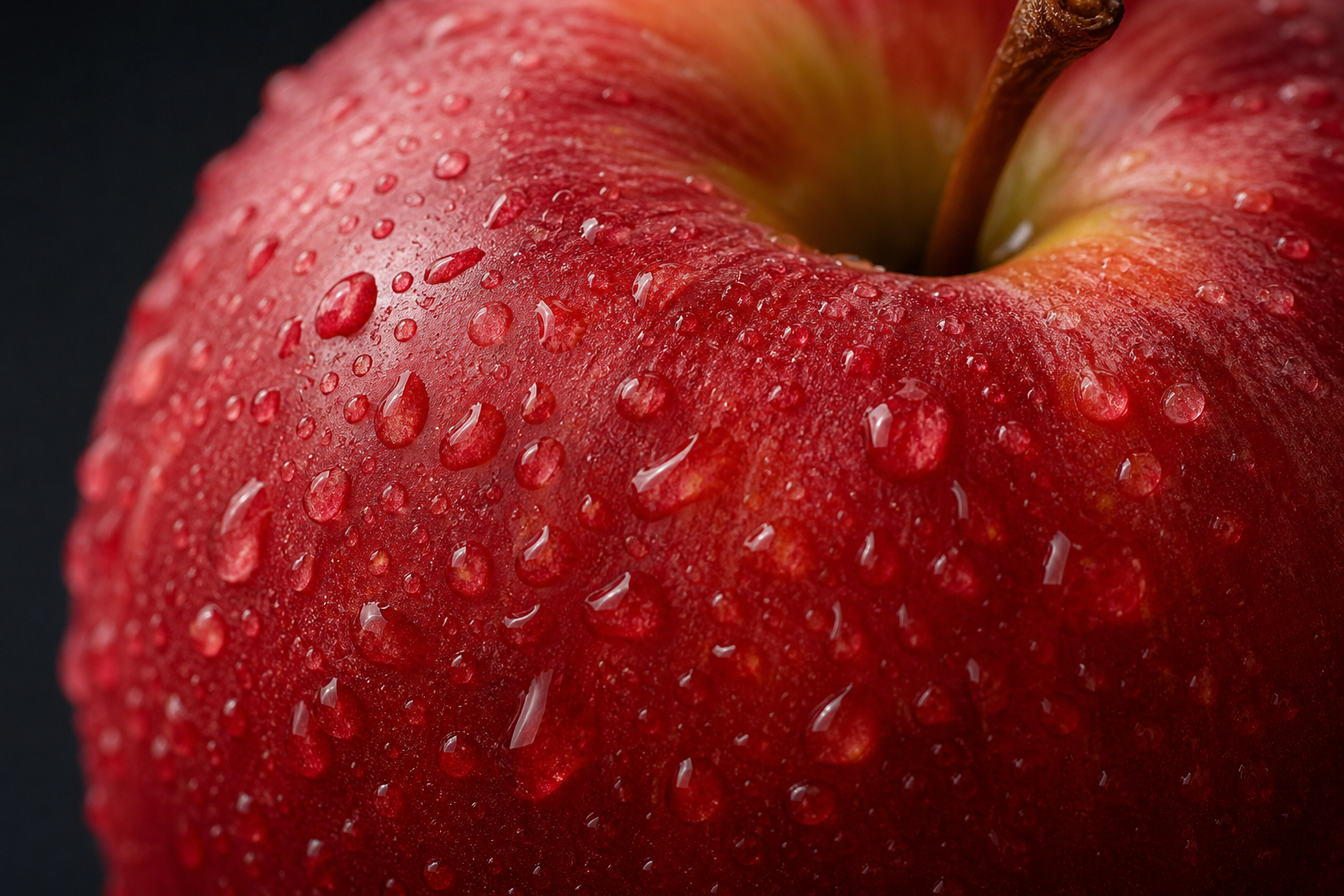
We can no longer see the apple. We see its surface. The waxy texture, the small dimples, a single droplet of water clinging to the skin. The apple has become abstract.
What the prompt is doing: invoking macro photography conventions—shallow depth of field, intense detail, almost scientific intimacy.
When to use it: when texture is the subject.
5. Isometric view
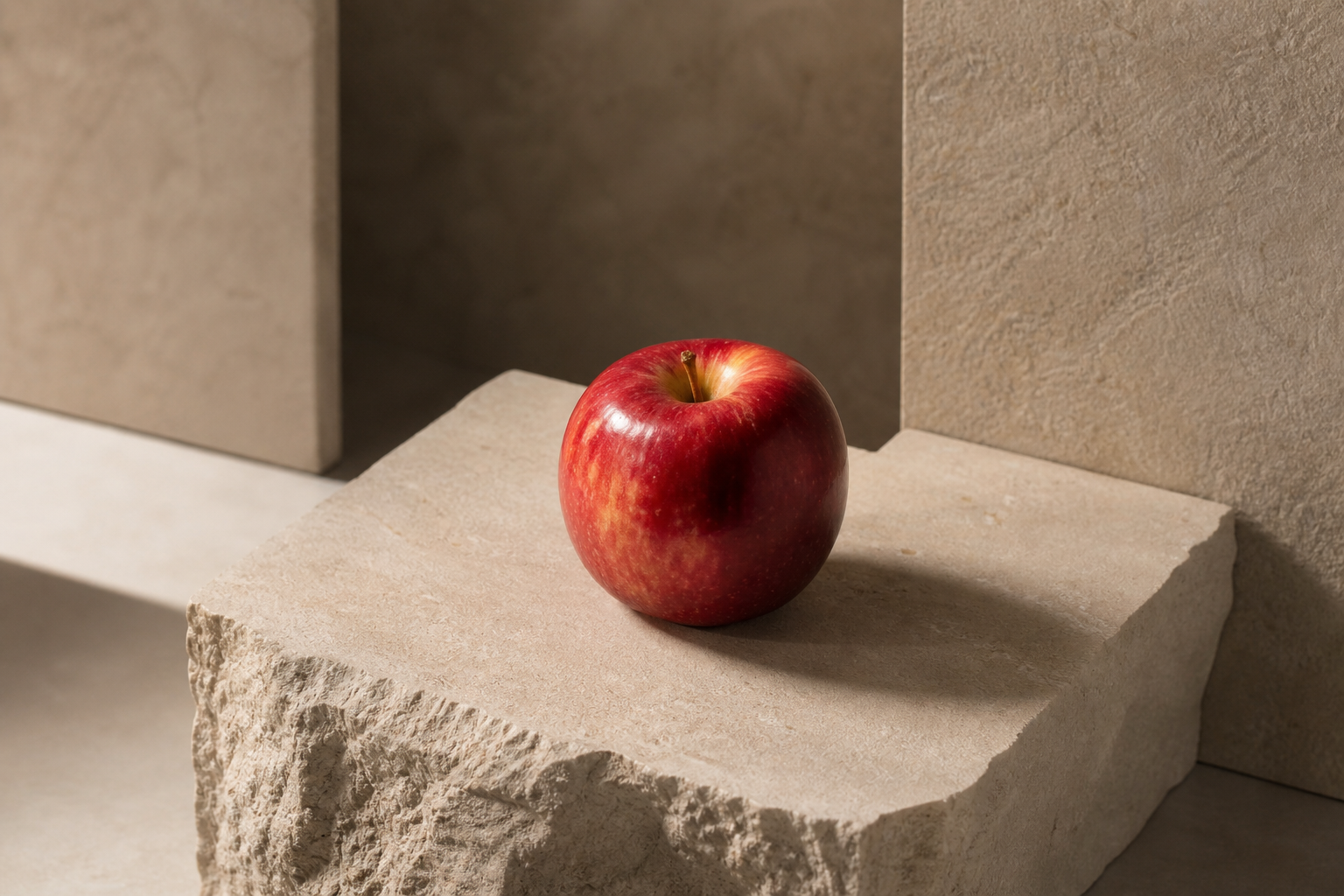
The apple looks like a 3D rendering, but flat. Lines that would converge in real perspective now stay parallel. The apple feels like it belongs in a video game asset library.
What the prompt is doing: pulling from a specific aesthetic—technical illustration, isometric games, infographic design.
When to use it: when you want clean, illustrative, almost diagrammatic imagery.
Why angle matters more than people realize
Most prompt guides treat angle as a minor detail, something you might add at the end after you've chosen your style and subject. I think this is exactly backwards.
Angle is one of the first decisions you should make, because angle defines the emotional contract of the image before any styling decision can be made.
A bird's eye view of a city, painted in oil, feels like a map. A worm's eye view of the same city, painted in the same oil, feels like a cathedral. The medium did not change. The angle did. And the angle determined what the painting was about.
This is what I mean by prompt literacy: knowing that angle is doing this work, even when you haven't explicitly chosen it. Every image generated with no angle keyword has some angle. Eye level is a choice, even when you didn't choose it.
Angle in combination with other variables
Angle becomes more interesting when it combines with other prompt dimensions. A few combinations worth knowing:
Bird's eye + minimalism = editorial flat lay, magazine cover energy. The reduction of dimensionality reinforces the reduction of visual elements.
Worm's eye + dramatic lighting = cinematic poster. The grandeur of the angle compounds with the contrast of the lighting.
Macro + soft focus = product photography. Almost no commercial brand photography exists without this combination.
Isometric + flat color = infographic. Used in tech illustrations, app onboarding, explainer content.
Dutch angle + high contrast = unease, instability. Used in horror and thriller imagery.
These are not formulas to follow. They are patterns to notice. Once you see them, you start writing prompts that are aware of what they are pulling on.
Common mistakes
Some things I learned by getting them wrong:
Mistake 1: Treating "high angle" and "bird's eye view" as the same thing.
They are not. High angle is a moderate downward tilt. Bird's eye view is straight down. The model treats them differently. If you want a flat-lay look, bird's eye is the word. If you want a more naturalistic looking-down feeling, high angle is the word.
Mistake 2: Adding too many angle words.
"low angle, worm's eye, dramatic upward perspective" — the model gets confused. It will average the directions you've given it, often producing something neither dramatic nor low. Pick one angle word and stop.
Mistake 3: Forgetting that angle is a relationship, not just a position.
"Low angle" only makes sense if the subject is small enough to look up at. A low angle prompt for a flat object (like a coin) tends to produce something strange. Match the angle to what the subject can be in.
Mistake 4: Ignoring that some artistic mediums have built-in angle conventions.
Isometric video game art is almost always at 30 degrees. Renaissance still life paintings are almost always at slight high angles. If you specify "Renaissance still life, worm's eye view," you are fighting the medium's default angle, and the model will either obey you (and produce something that looks wrong) or override you (and produce a more typical Renaissance angle).
A small experiment
Here is the practice I'd suggest if you want to internalize this:
- Pick a subject you care about. (Apples are fine. So is anything.)
- Write the most basic prompt you can: "a red apple, realistic photography, white background."
- Generate it once. Look at it.
- Now generate it with each of these added: "bird's eye view," "low angle," "macro close-up," "isometric," "side profile."
- Place all five images next to each other.
- Ask yourself, for each one: what story does this image tell? What is the implied character of the photographer? What does the angle make me feel?
This is, in essence, what infinite apples is. A controlled comparison. A way of seeing what the words are doing, by holding everything else still.
The angle you didn't choose
The honest reason I started this project is that I noticed I was writing prompts without thinking about angle. I'd specify the medium, the style, the lighting, the mood—but the angle stayed at default eye-level, because I never told it otherwise.
When I started consciously varying angle, my generations got more interesting almost immediately. Not because angle is magic. But because the default was lazy, and I hadn't realized I was defaulting.
This is, I think, the deeper purpose of prompt literacy: not to memorize words, but to notice what choices you've been making without choosing.
Angle is one. There are many others.
Next in the series: how lighting changes everything. And nothing.
Read about the project at infiniteapples.art. Try the angle tutorial in 3D [here].